Corn Stover Anaerobic Digestion Checklist | AneroShift

A practical readiness checklist for biogas plants using corn stover, covering feedstock handling, hydrolysis risk, digester stability, foam control, and enzyme trial planning.

Request pricing

Corn Stover in Anaerobic Digestion: A Practical Readiness Checklist

Corn stover can be a useful high-fiber feedstock for anaerobic digestion, but it is rarely plug-and-play. Stalks, leaves, husks, fines, field soil, seasonal moisture swings, and storage losses can all change how the material behaves in reception, mixing, hydrolysis, and gas production.

For operations teams, the question is not simply whether corn stover can produce methane. The practical question is whether your plant can feed it consistently without adding avoidable process stress.

AneroShift works as an enzyme supplier for biogas production where lignocellulosic substrates need better hydrolysis behavior, steadier conversion, and clear trial data before scale-up. Use this checklist before moving corn stover from opportunity to routine ration.


1. Confirm the feedstock is physically ready

Corn stover is variable by harvest method, baling, storage, and weather exposure. Before discussing enzyme support, confirm that the material can move through the plant without creating mechanical instability.

Check before intake

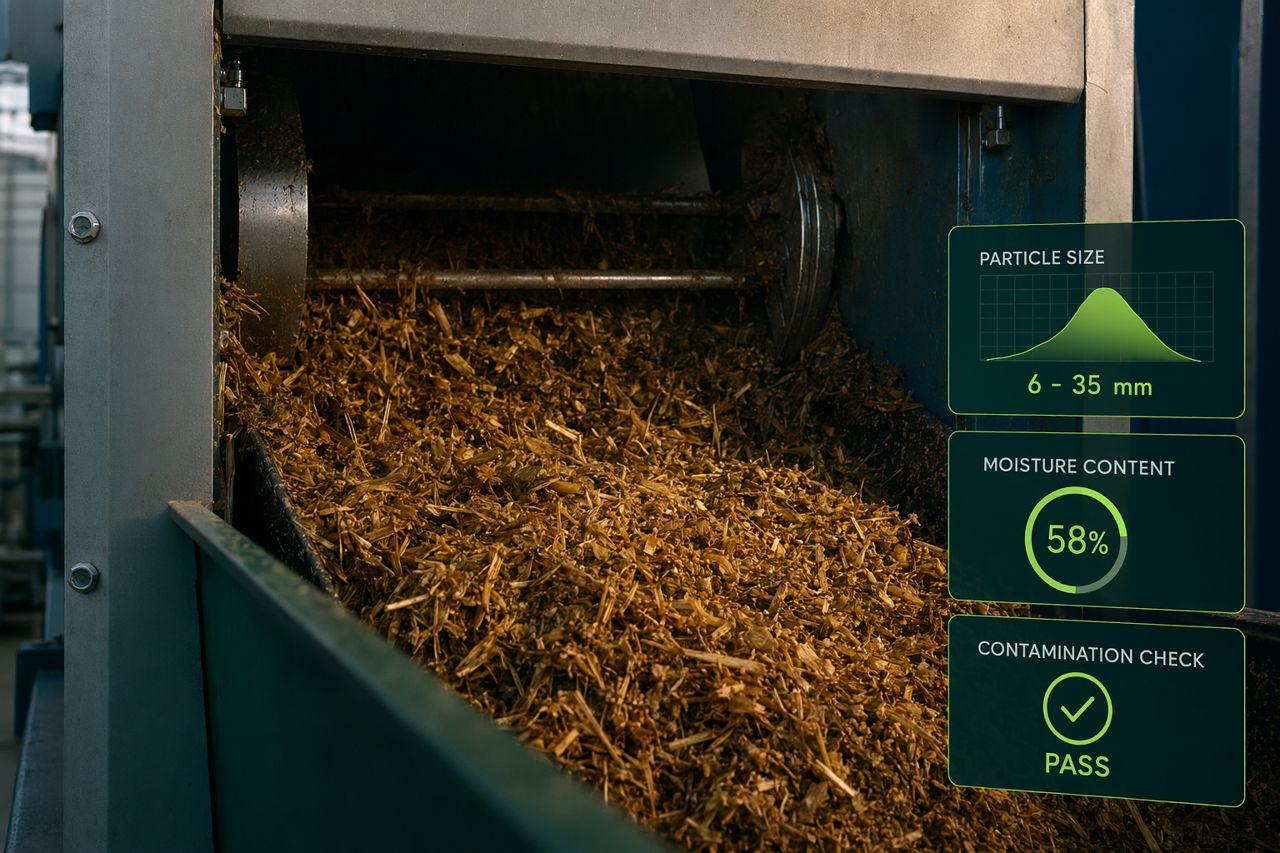
  • Moisture range: Is the stover dry, weathered, partially ensiled, or mixed with wetter residues?
  • Particle size: Is chop length compatible with your reception, mixing, and pumping system?
  • Contamination: Check for stones, soil, plastic wrap, netting, and metal fragments.
  • Storage condition: Look for mold pockets, heating, excessive dirt, or degraded bales.
  • Blend consistency: Can the supplier deliver similar material week after week?

Plant-aware warning signs

  • Bridging in hoppers or conveyors
  • Floating mats in receiving tanks
  • Higher mixer load after ration changes
  • More grit accumulation
  • Pump strain or inconsistent flow

If the plant cannot move the substrate reliably, enzymes will not solve the root cause. Fix handling first.


2. Know what corn stover changes inside the digester

Corn stover is rich in lignocellulosic structure. That means the available carbon is not released as quickly as with many wet or soluble substrates. Hydrolysis can become the limiting step, especially when the ration is increased too fast.

Watch these operating points

  • Gas response delay: Methane uplift may lag behind feed changes.
  • Viscosity: Fiber can increase mixing resistance and create dead zones.
  • Foam and scum tendency: Floating fractions can trap gas and form surface layers.
  • Volatile fatty acid trend: Instability can appear if hydrolysis and downstream conversion fall out of balance.
  • Alkalinity reserve: Buffering capacity matters when feedstock changes are aggressive.
  • Hydraulic retention time pressure: Slow breakdown may reduce practical conversion within the available retention window.

The goal is not to force more fiber into the digester at any cost. The goal is to increase usable conversion while keeping the biology steady.


3. Decide whether pretreatment is needed

Some plants can integrate low levels of corn stover with basic size reduction and careful blending. Others need additional preparation before the material behaves predictably.

Review pretreatment options

  • Mechanical size reduction to improve surface area and feeding reliability
  • Soaking or slurry preparation to reduce floating behavior
  • Co-digestion blending with wetter substrates to improve pumpability
  • Thermal or chemical pretreatment where economics and permits allow
  • Enzyme-assisted hydrolysis support to improve access to fibrous fractions during a controlled trial

AneroShift’s role is practical: identify where enzyme support can help release more usable substrate and where mechanical or process changes should come first.


4. Set a safe inclusion-rate plan

Corn stover should be introduced in steps, not as a sudden ration shift. The right ramp depends on digester design, current feedstock mix, retention time, mixing strength, trace nutrient status, and historical stability.

Ramp-up checklist

  • Establish a stable baseline before adding stover.
  • Introduce the material gradually.
  • Keep the rest of the feed mix as steady as possible during evaluation.
  • Record daily organic loading changes.
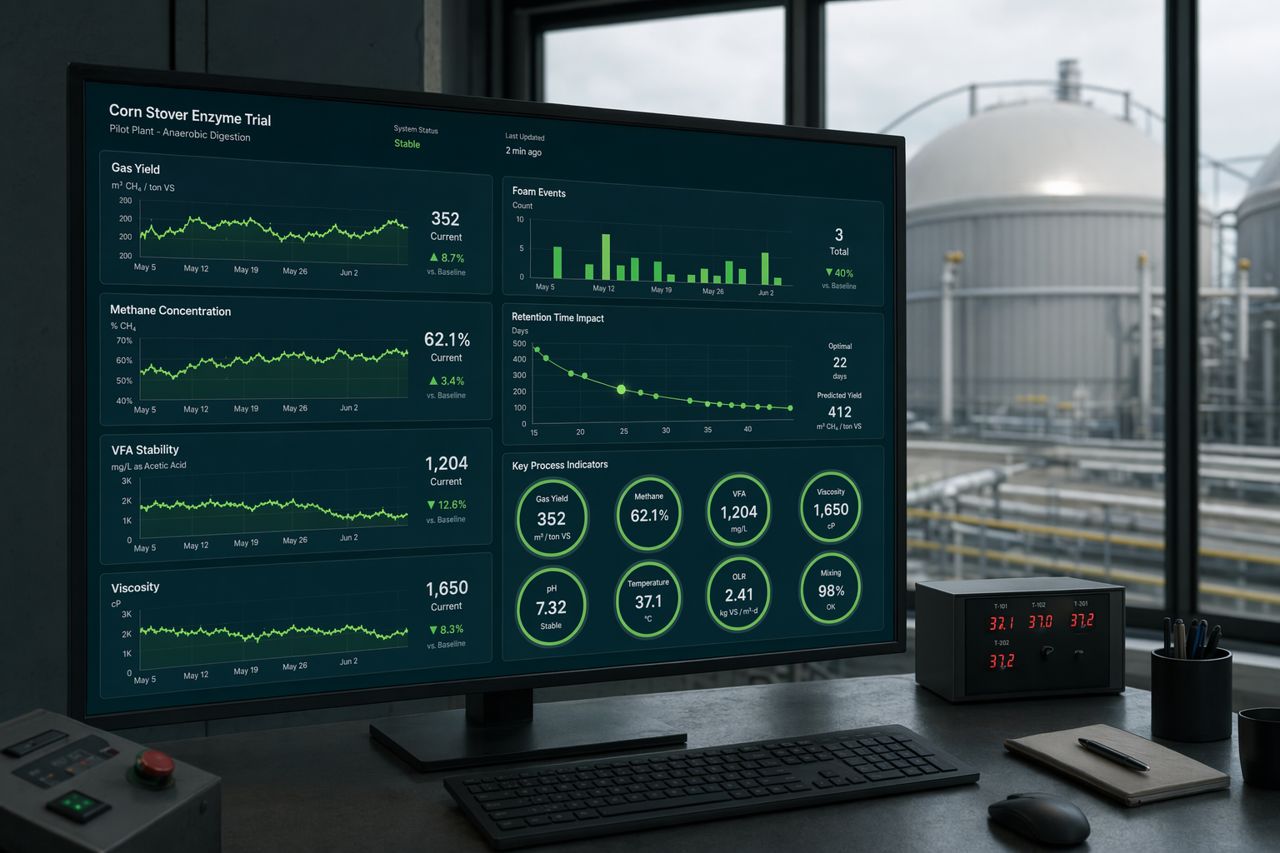
  • Track gas output and methane concentration together, not separately.
  • Watch volatile fatty acids, alkalinity, pH, foam events, and digestate viscosity.
  • Document mechanical issues, not just lab values.

A feedstock that looks profitable on paper can lose value quickly if it increases downtime, foaming, or operator intervention.


5. Identify where enzymes may create value

An enzyme program for corn stover digestion should be evaluated against plant outcomes, not generic claims. In high-fiber digestion, the main value areas are usually hydrolysis support, steadier release of fermentable material, reduced viscosity pressure, and improved gas recovery within the plant’s actual retention time.

Potential operational benefits to test

  • Faster breakdown of accessible plant fiber fractions
  • More stable gas release after feeding
  • Better use of fibrous solids before discharge
  • Lower viscosity-related mixing stress
  • Reduced scum and foam tendency when fiber behavior improves
  • More predictable performance during seasonal feedstock variation

Enzymes are not a substitute for good feedstock control, balanced loading, or adequate mixing. They are a process tool that should be tested with a measurable protocol.


6. Build the trial protocol before you dose

A credible enzyme trial starts before the first delivery. If the plant does not define the baseline and decision criteria, it becomes difficult to separate enzyme effect from feedstock variation, weather, loading changes, or operator adjustments.

Minimum trial structure

  1. Baseline period: Record stable operation before the change.
  2. Feedstock definition: Document corn stover source, moisture, chop profile, storage condition, and ration share.
  3. Dosing plan: Apply the enzyme consistently at the agreed feed point.
  4. Control of variables: Avoid unrelated major feed or process changes during the trial where possible.
  5. Monitoring period: Evaluate over multiple hydraulic cycles, not a few isolated days.
  6. Decision review: Compare agreed metrics against baseline and operating cost.

Metrics that matter to operations

  • Biogas volume and methane concentration
  • Specific gas yield relative to feed input
  • Volatile fatty acid stability
  • Alkalinity reserve
  • Foam or scum incidents
  • Mixer and pump load observations
  • Digestate fiber appearance
  • Retention time impact
  • Downtime, cleaning, or manual intervention

The best trial result is not always the highest single-day gas number. It is a stable, repeatable improvement that operators can run without adding new problems.


7. Prepare the team for field variability

Corn stover quality changes with harvest timing, rainfall, soil carryover, bale storage, and handling. A ration that works in October may behave differently after months of outdoor storage.

Build these controls into routine operation

  • Create intake acceptance limits for contamination and moisture.
  • Keep bale sources traceable.
  • Blend lots where possible to reduce sudden shifts.
  • Inspect storage regularly.
  • Review gas and stability data after each major source change.
  • Adjust enzyme strategy only after confirming the feedstock change.

This is where a plant-aware enzyme supplier for biogas production should bring more than a product. The supplier should help interpret operating data, identify likely bottlenecks, and refine the protocol when the substrate changes.


8. Decision checklist: is your plant ready?

Use this quick review before approving a corn stover digestion trial.

Ready to proceed

  • Feedstock supply is consistent enough for a meaningful trial.
  • Particle size and handling are compatible with the plant.
  • The digester has stable recent operating data.
  • The team has agreed on baseline metrics.
  • Foam, viscosity, and volatile fatty acid monitoring are in place.
  • The enzyme trial has defined duration, feed point, and review criteria.

Pause and correct first

  • Stover quality is inconsistent or poorly documented.
  • The reception system is already struggling.
  • The digester is unstable before the trial begins.
  • Multiple feedstock changes are planned at the same time.
  • There is no clear method for comparing results.
  • Operators are expected to judge success by gas volume alone.

Work with AneroShift on a measured corn stover trial

AneroShift supports biogas plants that want practical enzyme programs for fibrous feedstocks, not guesswork. We help define the substrate challenge, structure the trial, and connect enzyme use to plant metrics such as methane yield, hydrolysis behavior, viscosity, foam tendency, and retention-time performance.

If corn stover is entering your feedstock plan, bring us the operating context: digester type, current ration, loading pattern, retention time, mixing constraints, recent gas data, and the stover specification.

Request a quote through the on-site form and ask for a corn stover readiness review matched to your plant conditions.
Corn Stover Anaerobic Digestion Checklist | AneroShiftCorn Stover Anaerobic Digestion Checklist | AneroShiftCorn Stover Anaerobic Digestion Checklist | AneroShift

More from AneroShift

Request pricing & specs

Tell us your application and volume — we reply with pricing and lead time.

We reply by email.Only name, email and message are needed.