Feedstock Storage Losses That Quietly Reduce Biogas Economics
Biogas economics do not start at the digester inlet. They start in the clamp, bunker, tank, reception hall, lagoon, and feedstock queue.
For many plants, the largest process question is not whether the digester can convert organic material. It is whether the material arriving at the dosing system still contains the same methane potential, moisture profile, viscosity, and particle accessibility that the plant expected when the contract was signed.
Storage losses are often treated as a housekeeping issue. In practice, they can become a methane, stability, and margin issue.
AneroShift works with operators who need a practical enzyme supplier for biogas production, especially where feedstock variability is affecting hydrolysis speed, digester stress, foaming tendency, or day-to-day gas output.
Where feedstock value disappears before digestion
Storage losses are not always visible as a dramatic failure. They are usually incremental.
Common loss pathways include:
- Aerobic heating in silage, crop residues, and mixed organic streams
- Leachate loss from wet substrates, carrying soluble carbon away from the intended feed path
- Surface spoilage that changes the biological load entering the digester
- Excessive compaction or crusting that makes material harder to mix and hydrolyse
- Long holding times for food waste or industrial residues that increase variability between loads
- Rain ingress or dilution that reduces feed concentration and changes pumpability
- Drying at exposed surfaces that changes fibre behaviour and feed screw performance
Each issue reduces predictability. The digester then has to absorb a feedstock profile that is not the same as the procurement specification.
Why small storage losses matter in a high-throughput plant
A biogas plant can appear stable while still losing economics.
The signal may show up as:
- Lower gas yield from the same contracted input volume
- More variable methane concentration after feed changes
- Higher mixing load due to thicker or inconsistent substrate
- Slower digestion of fibrous fractions
- Rising VFA pressure after high-risk batches
- Increased foam risk when degraded or unstable feed enters quickly
- More conservative feeding rates to protect digester stability
- Reduced confidence in retention time planning
This is why storage management is not only a logistics topic. It is a conversion-efficiency topic.
The hidden link between storage condition and hydrolysis
Hydrolysis is the front end of anaerobic digestion. If the substrate is difficult to open up, downstream biology receives soluble material more slowly or less evenly.
Poor storage can make this harder in several ways:
-
Particle structure changes
Fibres may dry, compact, mat, or bind in ways that reduce accessibility.
-
Soluble fractions can be lost
Leachate and runoff can remove material that would otherwise be rapidly converted.
-
Biological instability increases
Partially spoiled feed can enter with a less predictable organic acid profile.
-
Viscosity changes
Thick or inconsistent feed can reduce mixing efficiency and increase process stress.
-
Feed timing becomes less reliable
Operators may need to slow or rebalance feeding when stored material behaves differently than expected.
In these conditions, enzymes are not a substitute for good storage. They are a process tool for improving substrate accessibility and supporting a more controlled hydrolysis step.
Where enzyme support can fit
AneroShift enzyme solutions are developed for industrial biogas teams dealing with real feedstock variability, not perfect laboratory substrates.
Depending on the plant and substrate mix, enzyme support can help operators target:
- Faster breakdown of fibrous and starch-rich fractions
- Improved release of fermentable material before and during digestion
- Smoother feeding response from difficult stored substrates
- Reduced viscosity pressure in selected feed streams
- Better digester stability when feedstock quality varies
- More consistent gas generation across storage-age differences
- Lower operational stress during seasonal feedstock transitions
The objective is not to force the biology. The objective is to make the substrate easier for the biology to use.
Feedstock types most exposed to storage-related loss
Storage losses can affect almost any organic feedstock, but the risk profile is higher in certain streams.
Energy crops and silage
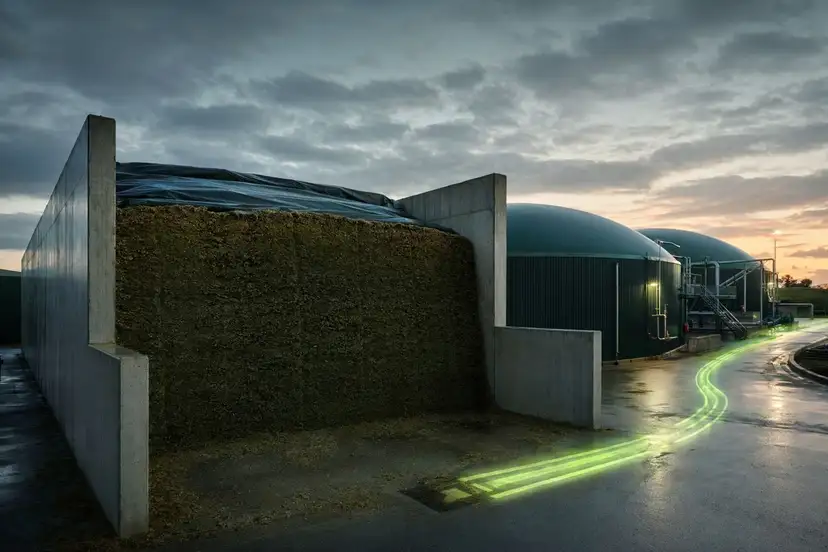
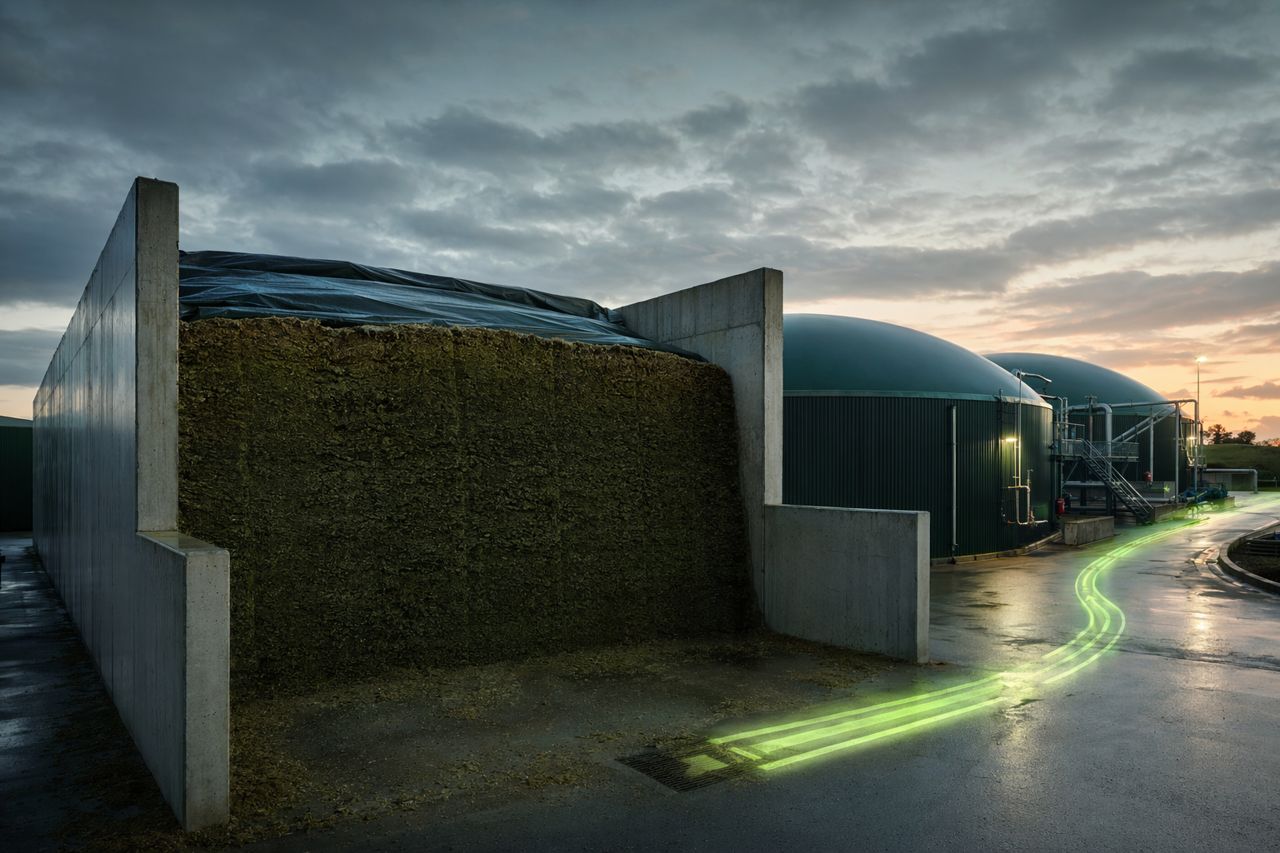
Maize silage, grass silage, whole crop cereals, and similar materials can lose value through poor sealing, oxygen exposure, face management issues, heating, or surface spoilage.
For these substrates, operators often watch for reduced gas response, inconsistent fibre breakdown, and changes in mixing behaviour.
Manure and slurry blends
Manure systems can be affected by dilution, settling, crusting, and variable holding times before digestion. Enzyme support may be evaluated where fibre accessibility and viscosity are limiting stable throughput.
Food waste and packaged organic residues
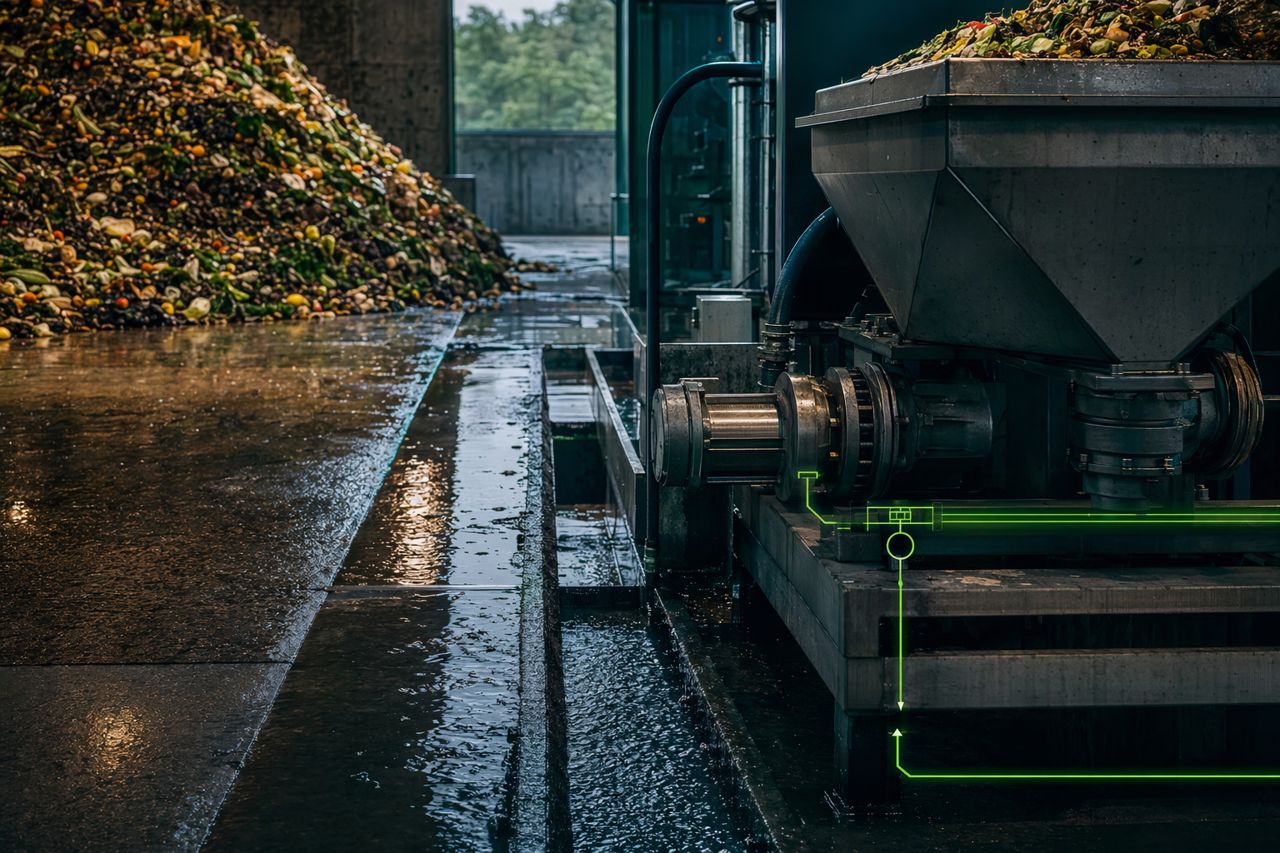
These streams may arrive with high variability in moisture, fat, carbohydrate, and degradation state. Storage time can shift the feedstock from high-value substrate to unstable process load.
Industrial by-products
Bakery residues, brewery streams, vegetable processing residues, and other by-products can be highly valuable, but their storage behaviour depends on temperature, moisture, solids level, and microbial change during holding.
What to measure before assuming a digester problem
When gas yield drops, the digester often gets the blame first. A better investigation starts upstream.
Useful checks include:
- Feedstock age at the point of dosing
- Temperature rise in stored material
- Visible spoilage, crusting, or liquid separation
- Leachate volume and destination
- Moisture changes by batch or storage zone
- Particle size and fibre consistency
- Pumping, mixing, or screw-load changes
- Gas response by feedstock batch
- VFA and alkalinity trend after feed transitions
- Foaming observations after specific loads
The strongest trials connect feedstock condition to digester response. Without that link, operators may only see averages, not causes.
A practical enzyme trial protocol for storage-variable plants
AneroShift recommends a controlled plant trial rather than a broad assumption.
A useful protocol usually includes:
-
Baseline period
Record gas output, methane concentration, feeding volume, substrate mix, VFA trend, pH trend, alkalinity trend, viscosity observations, foaming events, and mixing load before enzyme use.
-
Feedstock segmentation
Separate trial data by storage age, feedstock type, moisture condition, and visible quality. This prevents a clean load and a degraded load from being treated as the same input.
-
Defined dosing point
Choose whether the enzyme is applied in pre-mix, reception, hydrolysis, or direct feeding. The dosing point should match residence time, mixing quality, and substrate contact.
-
Stable operating window
Avoid changing multiple major variables at once. A trial is only useful if operators can interpret the result.
-
KPI tracking
Focus on gas yield per input, methane stability, VFA pressure, alkalinity buffer, feeding tolerance, viscosity behaviour, foaming incidents, and process alarms.
-
Review and scale decision
Compare performance against baseline and against non-treated periods with similar feedstock condition.
This approach gives operations managers evidence they can use, not just a supplier claim.
When storage losses require process action
Not every storage issue should be solved with enzymes. Some problems require direct site correction.
Examples include:
- Broken clamps or poor sealing
- Excessive oxygen exposure at the silage face
- Leachate escaping the controlled feed system
- Unmanaged rainwater dilution
- Reception tanks with long uncontrolled holding times
- Inconsistent blending before dosing
However, when storage variability cannot be fully eliminated, enzyme support can become part of the operating strategy. It can help narrow the performance gap between ideal substrate and real substrate.
How AneroShift supports biogas operators
AneroShift supplies enzyme solutions for biogas plants that need practical support around hydrolysis, feedstock variability, and digester stability.
Our approach is plant-aware:
- We start with feedstock and process constraints
- We define the intended enzyme role before trial start
- We align dosing location with mixing and contact time
- We build trial KPIs around operational outcomes
- We review gas, stability, viscosity, and foam indicators together
- We support scale-up decisions with measured plant data
The result is a clearer answer to a commercial question: can the plant recover more usable value from the feedstock it already handles?
Request a quote
If storage losses, variable feed quality, or slow hydrolysis are affecting your biogas economics, AneroShift can help define a structured enzyme trial for your site.
Use the on-site request a quote form to share your feedstock mix, storage conditions, dosing setup, and operating targets. We will respond with a practical supply recommendation and trial framework for your plant.
Request a quote