Seasonal Feedstock Risk Planning for Agricultural Biogas Facilities
Agricultural biogas plants rarely run on identical feedstock for twelve months straight. Harvest timing changes silage quality. Manure solids shift with bedding and ration. Food-processing residues arrive in uneven batches. Weather affects dry matter, fiber load, storage condition, and contamination risk.
For an operations manager, the issue is not simply whether a new feedstock is available. The real question is whether the digester can absorb the change without losing methane performance, building viscosity, creating foam, or pushing VFA and alkalinity balance into a stressful zone.
AneroShift supports agricultural facilities that want a more controlled way to manage these seasonal transitions. As an enzyme supplier for biogas production, we focus on faster hydrolysis, improved substrate accessibility, reduced process stress, and measurable plant trials that fit real operating constraints.
Why seasonal feedstock changes create process risk
Seasonal feedstock risk usually appears before it becomes a full upset. The warning signs are familiar:
- Slower gas response after feed changes
- Rising viscosity or poor mixing behavior
- Higher recirculation load
- More floating layers or crust formation
- Increased foam tendency
- Wider VFA fluctuation
- Declining methane share or unstable daily gas output
- Longer digestion pressure on retention time
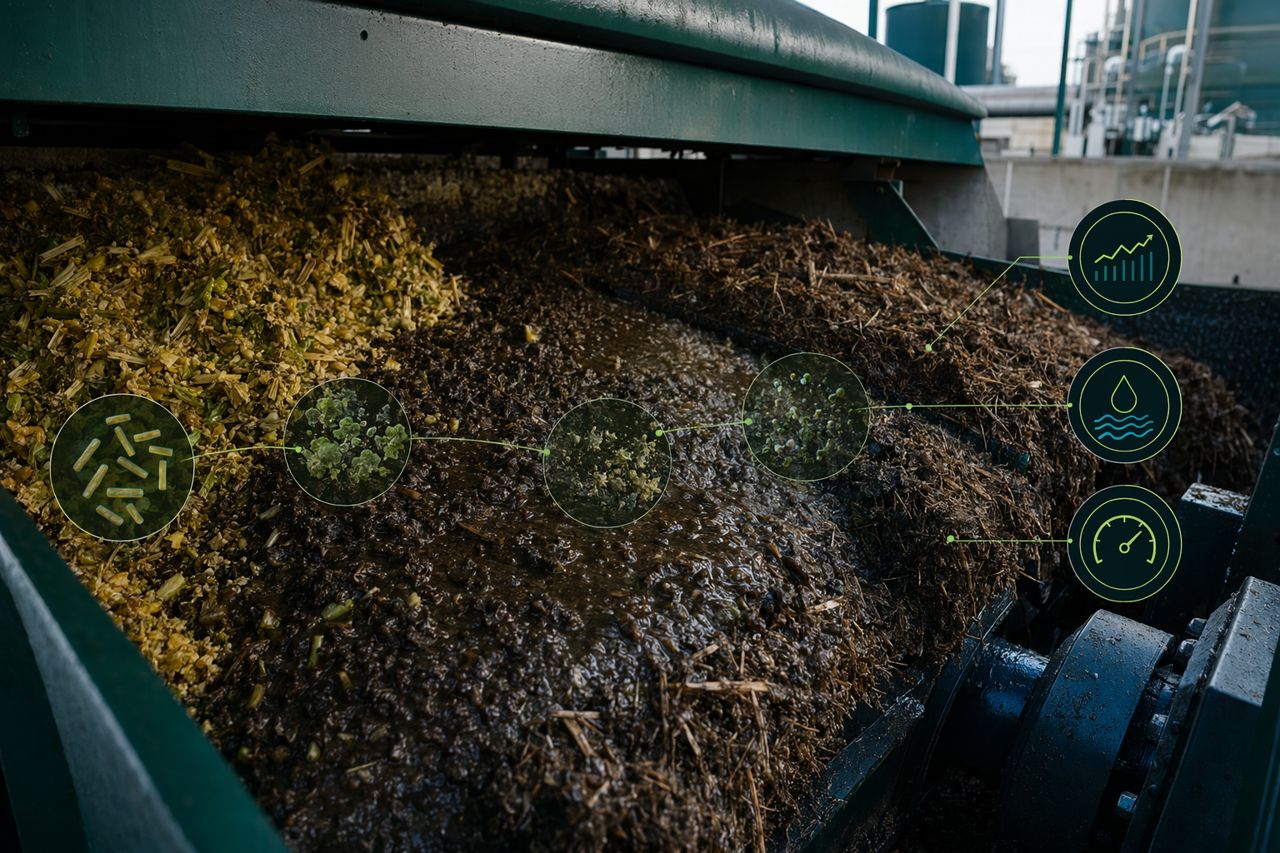
These problems often trace back to hydrolysis. When fibrous or complex substrates enter the digester faster than the biology can open them up, the plant carries more undigested material through the system. The result is not always dramatic at first, but it reduces operating margin.
Build the seasonal risk map before the feedstock arrives
A practical seasonal feedstock plan starts with a simple risk map. The goal is not to overcomplicate daily operation. The goal is to identify which incoming materials are likely to change the digestion load.
1. Classify feedstocks by digestion pressure
Group expected seasonal inputs by their likely impact:
- Low pressure: consistent manure streams, stable liquid residues, familiar silage batches
- Moderate pressure: crop residues, higher-fiber silage, variable food-processing by-products
- High pressure: straw-rich material, older silage, high-solids batches, fibrous residues, feedstocks with known foam behavior
This classification helps the plant decide when to adjust loading, blending, recirculation, enzyme use, and monitoring intensity.
2. Identify the hydrolysis bottleneck
Seasonal substrates often carry more structure than the digester can quickly access. Fiber, starch-protein complexes, plant cell walls, and trapped organics can slow the first stage of conversion.
When hydrolysis lags, operators may see gas output flatten even though organic input appears strong. Enzyme support can help expose more usable substrate earlier in the digestion pathway, improving the plant’s ability to handle variable material without excessive process stress.
3. Set a transition window
The highest-risk period is usually the changeover itself. Instead of waiting for instability, define a transition window around each seasonal feedstock shift.
A typical planning window may include:
- Baseline monitoring before the change
- Controlled blend-in period
- Enzyme-supported hydrolysis trial where appropriate
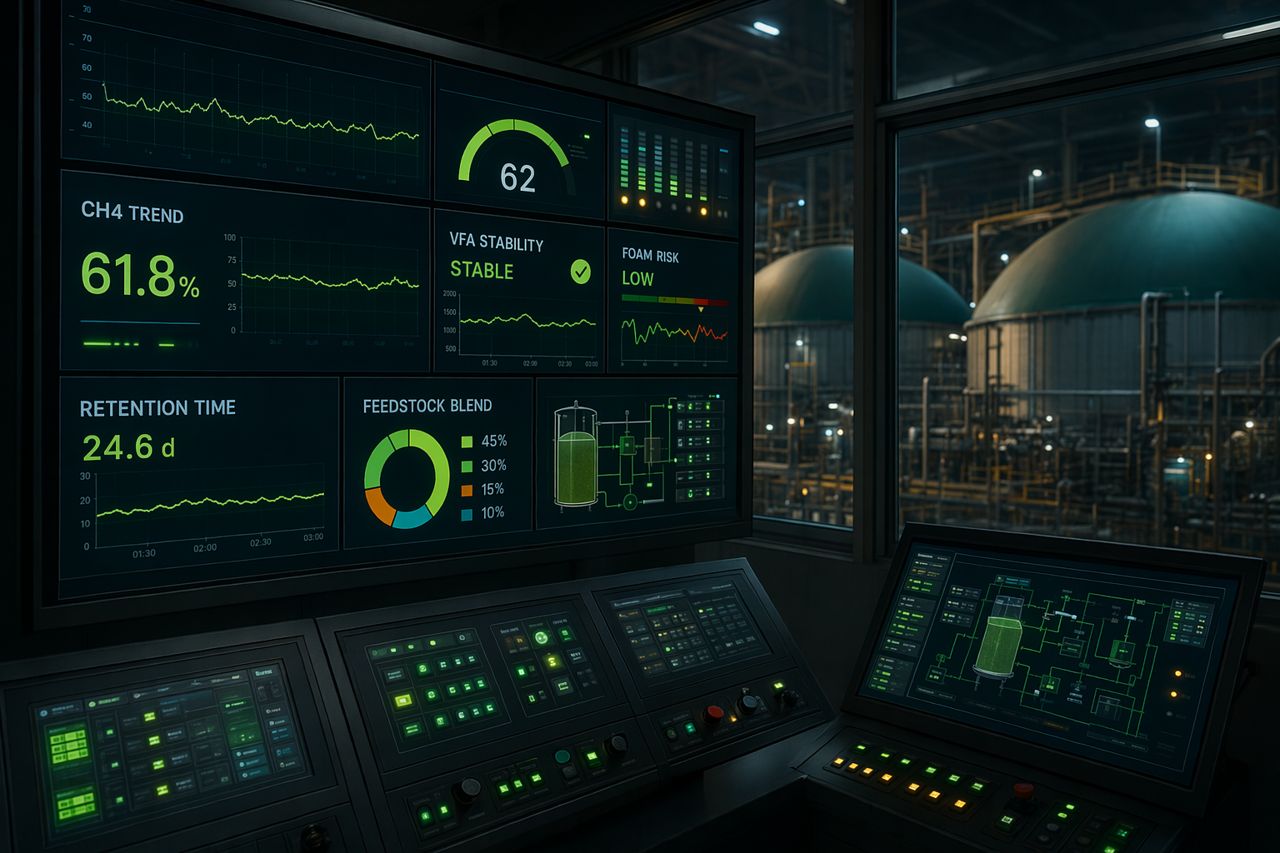
- Daily review of gas output, methane share, foaming, viscosity, feed acceptance, and VFA trend
- Decision point for continuation, adjustment, or rollback
The exact timing depends on digester retention, feedstock volume, and plant configuration. What matters is that the change is treated as a controlled event, not a routine substitution.
Where enzymes fit in the seasonal plan
Enzymes are not a substitute for good feedstock control, stable loading, or operator discipline. They are a process tool for helping complex organic material become more accessible to the microbial system.
For agricultural biogas plants, enzyme support is most relevant when the plant is dealing with:
- Fibrous crop residues
- High-solids seasonal feedstock
- Silage quality variation
- Straw or bedding carryover
- Increased viscosity
- Floating material or crust tendency
- Slow gas response after feed changes
- Retention time pressure
The business value is not theoretical. A well-structured enzyme trial should be assessed against plant-level indicators: gas uplift, methane consistency, reduced foam incidents, smoother VFA trend, improved pumpability, better mixing behavior, and less stress during feedstock transition.
A practical trial protocol for operations teams
AneroShift recommends treating enzyme use as an operational trial, not a guess. The best results come when the plant defines the baseline, the intervention point, and the success criteria before the seasonal shift begins.
Baseline period
Capture the plant’s normal operating pattern before feedstock change:
- Daily gas production
- Methane concentration trend
- Feed input and blend ratio
- Digester temperature stability
- VFA and alkalinity trend
- Mixing and pumping observations
- Foam or crust events
- Any known maintenance interruptions
Controlled implementation
Introduce enzyme support in alignment with the plant’s feedstock transition plan. Keep the evaluation clear by avoiding multiple major process changes at the same time where possible.
Useful controls include:
- Stable feeding schedule
- Documented blend changes
- Consistent sampling routine
- Operator log for foam, viscosity, and mixing behavior
- Defined review interval
Performance review
Review results against the plant’s own baseline. The strongest trials look beyond one headline number and assess whether the digester became easier to operate.
Key questions include:
- Did gas response improve after the feedstock shift?
- Did methane share remain steadier?
- Was VFA movement controlled?
- Did foam or crust behavior reduce?
- Did viscosity or pumping load improve?
- Did the plant maintain throughput with less process stress?
Foam control starts with upstream digestion behavior
Foam is often treated as a surface issue, but seasonal feedstocks can create foam risk deeper in the process. Rapidly fermentable fractions, poor substrate breakdown, high solids, and unstable biological balance can all contribute.
Enzyme-supported hydrolysis may help reduce the amount of poorly degraded material that contributes to foaming and floating layers. It should be used as part of a wider foam risk plan that also considers loading rate, mixing intensity, trace nutrients, temperature stability, and feedstock contamination.
Feedstock variability is a commercial issue
Seasonal material often looks attractive on cost or availability, but hidden process stress can reduce the commercial benefit. If the plant loses methane yield, increases downtime, or backs off loading to protect stability, the feedstock may not be as profitable as expected.
A seasonal risk plan gives the plant more control over that tradeoff. It helps operators decide which materials to accept, how quickly to introduce them, and when enzyme support can protect throughput.
What to prepare before requesting enzyme support
To make the first technical conversation useful, prepare a short operating snapshot:
- Digester type and approximate operating mode
- Main feedstocks and expected seasonal additions
- Current loading pattern and blend strategy
- Known bottlenecks: foam, viscosity, low gas response, VFA instability, retention time pressure
- Recent gas and methane trend
- Target outcome for the seasonal period
- Preferred timing for a plant trial
With this information, AneroShift can help structure a practical enzyme approach aligned with your facility’s operating reality.
Plan the next seasonal shift with more control
Seasonal feedstock variation does not have to mean unstable digestion. With a clear risk map, controlled trial protocol, and enzyme support targeted at hydrolysis bottlenecks, agricultural biogas facilities can protect gas output and reduce process stress during the most variable parts of the year.
If your plant is preparing for a seasonal feedstock change, use the on-site request a quote form to share your operating context. AneroShift will review the application and respond with a practical supply and trial proposal.