How to Think About Substrate ROI in Biogas Without Overpromising Methane Gains
Substrate ROI in biogas is rarely a clean spreadsheet exercise. Feedstock quality moves. Mixing behavior changes. Retention time gets tight. Foaming or viscosity can push operators into conservative loading decisions. Methane uplift matters, but it should not be the only line in the model.
For a plant evaluating an enzyme supplier for biogas production, the useful question is not, “How much extra gas can we promise?” The useful question is, “Where is the digestion process currently constrained, and can faster, more complete substrate breakdown create measurable operating value?”
AneroShift supports that conversation with practical enzyme programs for anaerobic digesters, built around feedstock profile, process stress, and plant-side trial discipline.
The ROI problem: methane is only one part of the value case
Many biogas ROI discussions start and end with gas yield. That is understandable, but it can lead to overconfident assumptions.
A plant may see value through several operational pathways:
- Improved hydrolysis of fibrous, starchy, fatty, or protein-rich substrate fractions
- More consistent gas production under variable feedstock supply
- Reduced viscosity and better pumpability in challenging blends
- Lower foaming tendency where substrate breakdown is creating surface instability
- Better VFA stability during loading transitions
- Higher confidence when increasing the share of lower-cost or difficult substrates
- Reduced need to back off loading because the digester is under stress
- Improved use of available retention time
Methane gain is important. But a credible ROI model should include the process benefits that help operators keep the plant running closer to its intended envelope.
Start with the substrate constraint, not the enzyme
Before selecting an enzyme blend, define the business constraint in plant language.
Common substrate ROI scenarios
1. High-cost feedstock dependency
The plant relies on predictable but expensive substrates. The ROI case may come from safely increasing the share of lower-cost or more variable materials without destabilizing digestion.
2. Fibrous or slow-hydrolyzing input
Crop residues, silage fractions, straw-rich material, or certain food-waste blends can leave degradable material underutilized if hydrolysis is slow.
3. Viscosity-limited operations
When slurry becomes difficult to mix, pump, or distribute, the plant may lose effective contact between microbes and substrate. Enzymes can be evaluated for their ability to improve breakdown behavior before gas uplift is claimed.
4. Loading-rate caution
Operators may avoid pushing organic loading because VFA movement, foam, or inconsistent gas output creates risk. Here, the ROI case is partly about process confidence.
5. Feedstock variability
Seasonal supply changes, supplier swaps, and inconsistent waste streams can make a stable digester harder to maintain. Enzyme use may help smooth the front end of degradation when the substrate profile changes.
Build the ROI model in three layers
A plant-aware model should separate hard financial value, operational value, and risk control. That keeps assumptions visible and prevents inflated methane claims.
Layer 1: Direct gas value
This is the simplest line item: incremental saleable energy from improved substrate conversion.
Use a conservative range, not a single headline number. Normalize against comparable feedstock input, temperature profile, loading pattern, and retention time. AneroShift recommends reviewing gas production together with VFA trend, pH behavior, foam events, and digestate characteristics so the gas result is not misread.
Layer 2: Substrate flexibility value
This layer is often more important than expected. If enzyme treatment allows the plant to process a more economical blend, the financial gain may come from feedstock substitution rather than gas alone.
Examples include:
- Replacing a portion of high-cost substrate with slower-degrading material
- Accepting variable waste streams with better process control
- Using more fibrous material without creating mixing stress
- Increasing confidence in seasonal substrate transitions
The ROI question becomes: “Can the enzyme program widen the usable feedstock window?”
Layer 3: Stability and operating value
A digester under stress forces conservative decisions. Stability has value because it protects throughput.
Track indicators such as:
- VFA trend and recovery behavior
- Foam frequency and severity
- Viscosity and mixing observations
- Pumping effort and blockage events
- Gas consistency, not only gas peak
- Retention-time pressure during high-load periods
- Operator interventions required to hold steady operation
These factors may not all appear as a separate revenue line, but they influence the plant’s ability to maintain planned loading and avoid avoidable downtime.
A practical trial protocol for enzyme ROI
AneroShift trial planning is designed for B2B operators who need defensible results, not lab-style claims detached from the plant.
1. Define the operating objective
Choose one primary target before the trial starts:
- Faster hydrolysis of a specific substrate fraction
- Improved gas consistency under variable feedstock
- Lower viscosity or easier mixing
- Reduced foam pressure
- Better VFA stability during a loading change
- Higher confidence in a revised substrate blend
Do not run the trial with every possible benefit treated as the main target.
2. Set the baseline window
Use recent plant data that reflects comparable feedstock and operating conditions. Exclude abnormal shutdowns, known equipment faults, and unusual feed interruptions unless those conditions are part of the trial question.
3. Keep the comparison honest
During the enzyme trial, record changes in feedstock mix, loading, temperature, mixing, recirculation, trace nutrient dosing, and any intervention that could influence gas or stability.
The cleaner the comparison, the more useful the ROI decision.
4. Review both yield and stress indicators
A trial can show value even when methane uplift is moderate, if it improves substrate handling, reduces process stress, or supports a lower-cost feedstock mix. Conversely, a short gas peak is not enough if VFA movement, foam, or viscosity becomes harder to manage.
5. Convert the result into a plant-specific business case
The final ROI view should include:
- Enzyme cost
- Incremental gas value, expressed as a conservative range
- Feedstock cost change, if blend flexibility is part of the plan
- Avoided operational disruption where documented
- Any measurable improvement in stability or handling
- Confidence level based on trial conditions
This creates a decision model that an operations manager, plant manager, and procurement team can all review.
Where enzyme selection matters
Anaerobic digesters are not all limited by the same substrate chemistry. A one-blend approach can miss the actual bottleneck.
AneroShift evaluates enzyme fit against the substrate profile and operating objective. Depending on the plant, the focus may include breakdown of cellulose-rich material, hemicellulose-rich fractions, starch-containing residues, proteinaceous inputs, fats and greases, or mixed organic waste streams.
The goal is not to add complexity. The goal is to match enzyme function to the substrate fraction that is slowing digestion or increasing process stress.
What not to include in the ROI model
A credible model avoids assumptions that cannot be defended at plant level.
Avoid:
- Applying a generic methane uplift percentage to every feedstock
- Comparing trial data against a weak or unstable baseline
- Ignoring feedstock substitution value
- Treating a temporary gas increase as sustained performance
- Overlooking foam, VFA, viscosity, and intervention history
- Assuming an enzyme can compensate for severe nutrient imbalance, poor mixing, or uncontrolled contamination
Enzymes can support hydrolysis and substrate utilization. They are not a substitute for disciplined digester management.
Embedded explainer video
[Faceless explainer video embed: substrate ROI model for biogas enzyme trials]
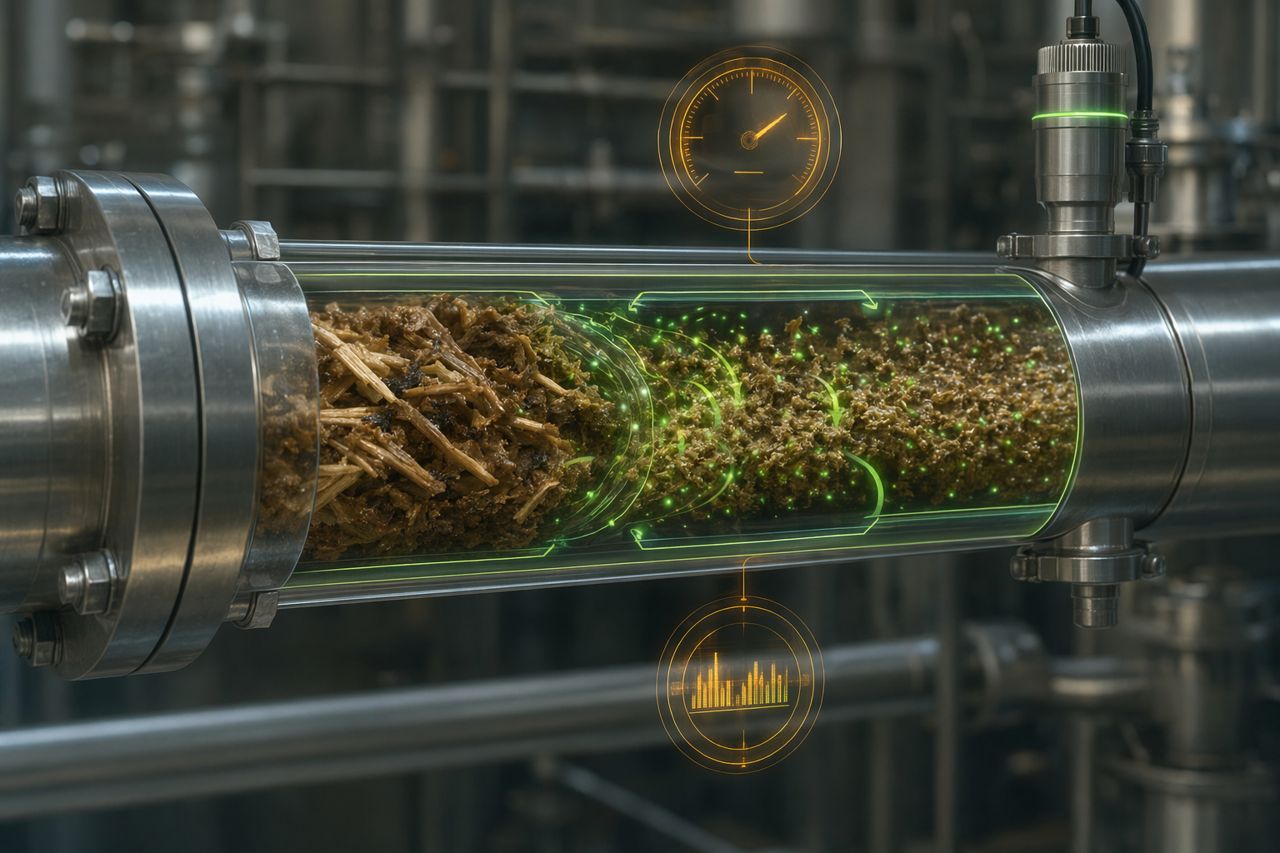
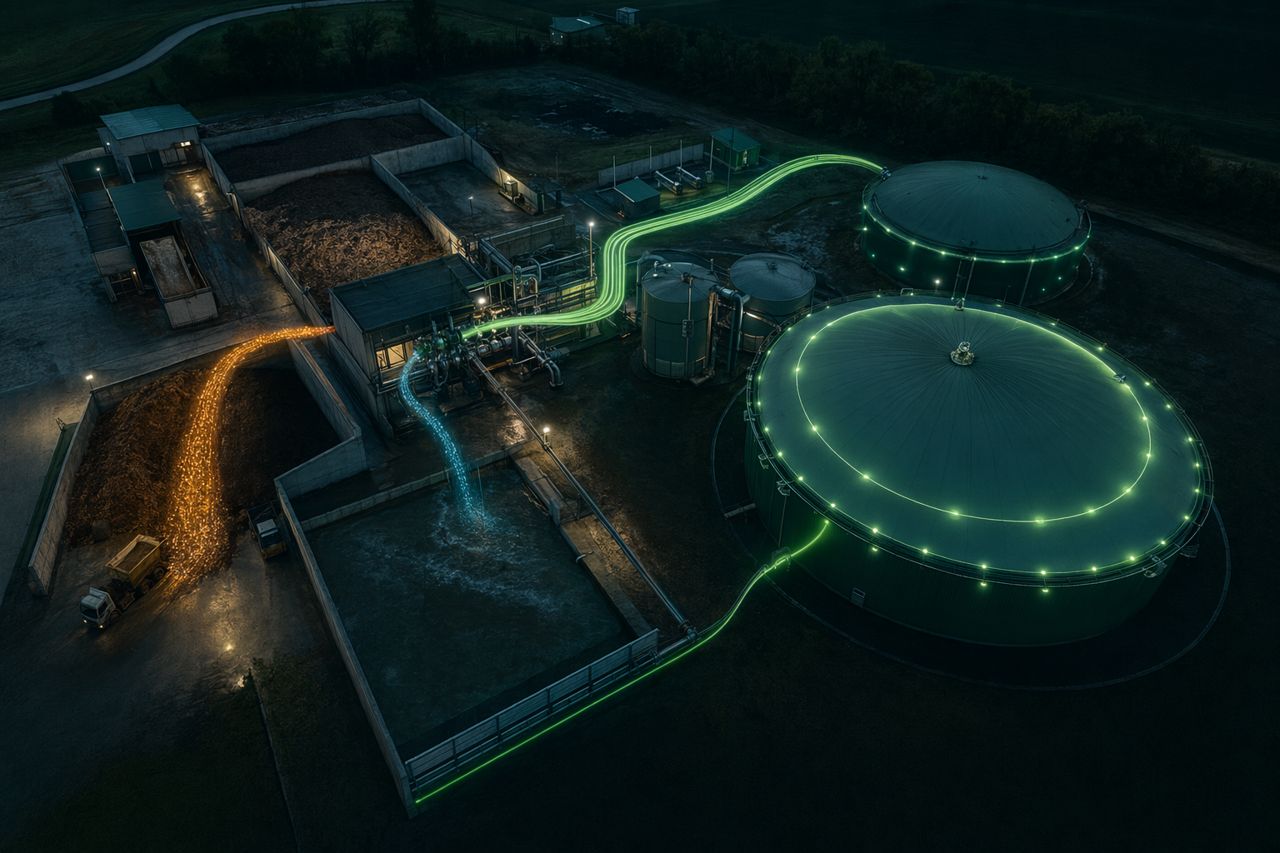
The video on this page should show the ROI logic visually: substrate particles entering the digester, enzyme-assisted breakdown at the hydrolysis stage, methane-flow paths rising steadily, and KPI rings for gas yield, VFA stability, viscosity, foam pressure, and retention time. No people, no avatar, no exaggerated claims.
AneroShift’s position on methane claims
AneroShift is an enzyme supplier for biogas production, but we do not recommend buying enzymes on a headline methane promise alone.
The better procurement question is:
Can the enzyme program improve the economics of the actual substrate mix while keeping the digester stable?
That is where disciplined trial design matters. When the plant’s constraint is clear, the baseline is credible, and the review includes both gas and operating stress, ROI becomes a management decision rather than a sales estimate.
Request a plant-specific quote
If you are evaluating enzymes for a biogas plant, share your feedstock mix, digester type, current operating challenge, and trial objective.
AneroShift can prepare a plant-specific enzyme recommendation and commercial quote through the on-site request form.
Use the quote request to tell us whether your priority is methane consistency, substrate flexibility, foam control, viscosity reduction, faster hydrolysis, or a defined loading-rate trial.